


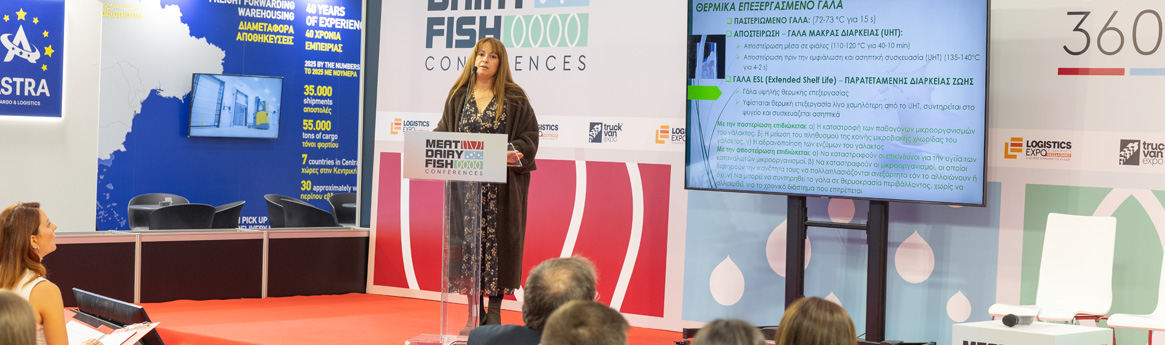
Food Industry 360°: Focusing on the Future of the Food Industry
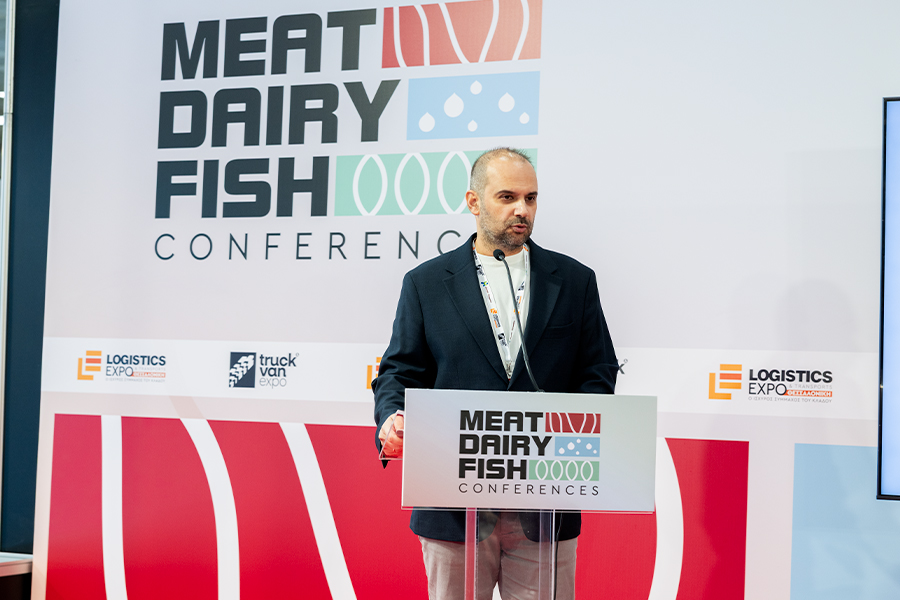
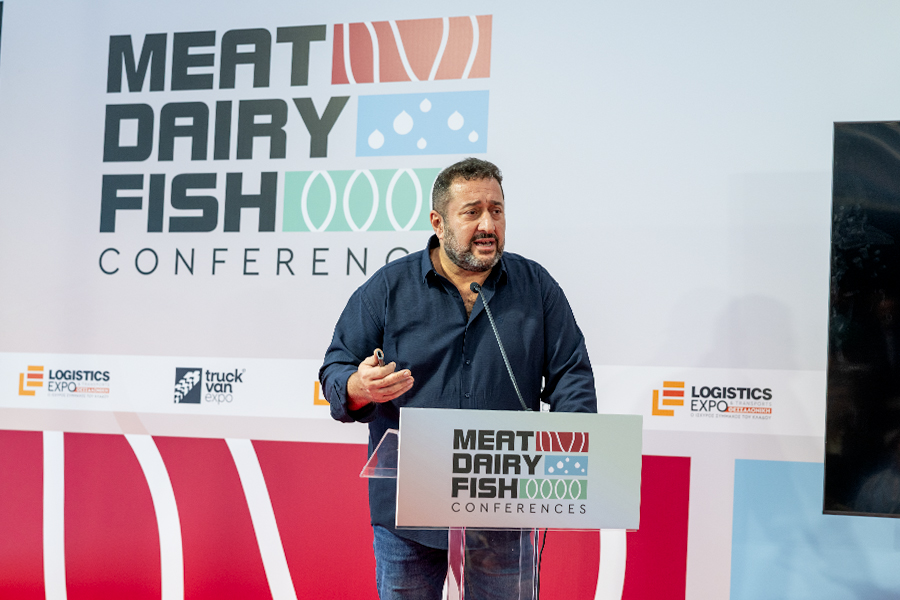
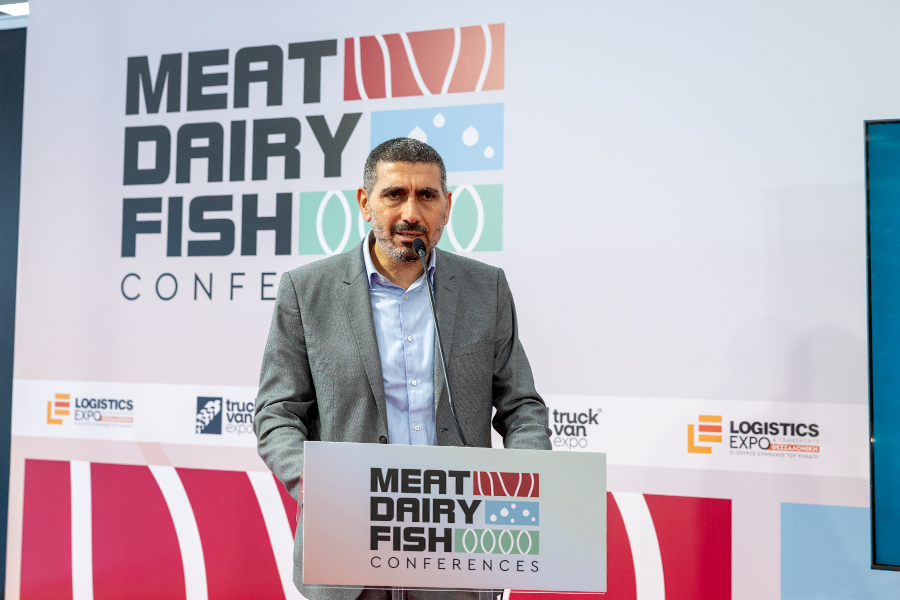
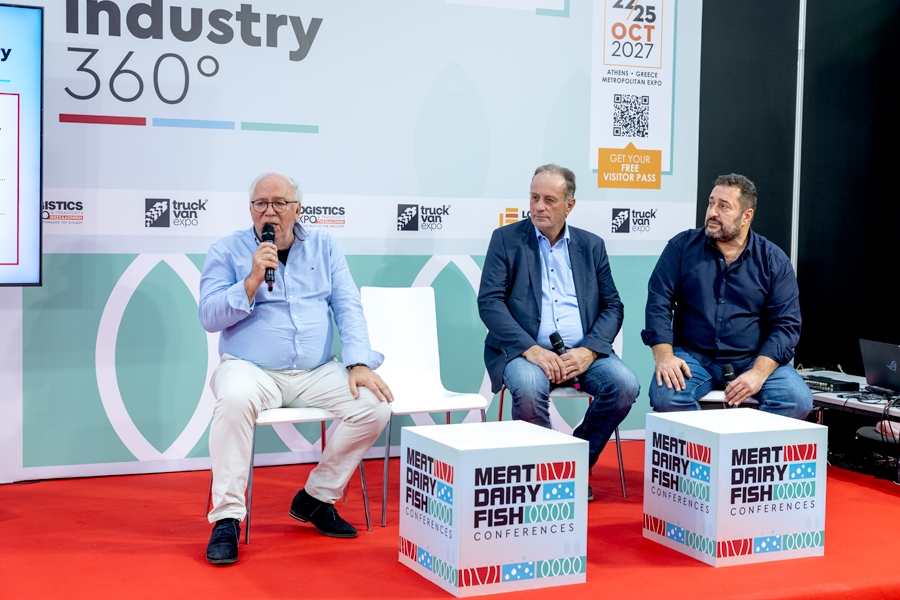
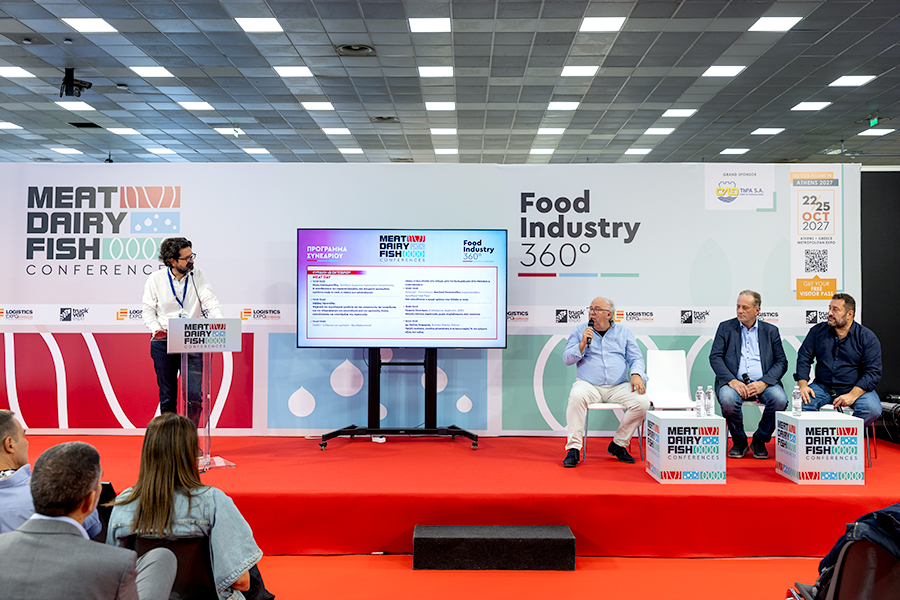
The “Food Industry 360°: Meat, Dairy & Fish” conference concluded successfully. Industry executives, producers, and experts discussed production, quality, innovation, sustainability, and consumer behavior, establishing the foundation for the future of the agrifood supply chain.
Review – Friday, October 16
FISH DAY: The Importance, Prospects, and Challenges of the Seafood Industry
The 1st day of the FOOD INDUSTRY 360° event and the MEAT.DAIRY.FISH CONFERENCES-held as part of the LOGISTICS EXPO exhibition from October 16 to 18, 2026, at the Thessaloniki International Exhibition Centre—was dedicated to seafood products and the traceability of their supply chain.
The primary focus of the so-called “FISH DAY” was the origin and quality of seafood. The first to take the stage was Kostas Xanthiakos, Agricultural Engineer & Food Technologist, who also served as the moderator for the conference. He highlighted Greece’s unique topography with its extensive coastline, as well as the dynamic nature of Greek aquaculture, which boasts an annual production of 130,000 tons, 80% of which is exported.
The Five Stages of the Cold Supply Chain
The next speaker was Panagiotis Karagiannakidis, Assistant Professor in the Department of Food Science and Technology at the International Hellenic University (IHU), who delivered a presentation titled: “Cold Supply Chain: From Water to Shelf.”
After explaining the unique characteristics of seafood products, the professor outlined the five stages of the cold supply chain:
- Catching – Initial Cooling / Freezing
- Unloading
- Transport
- Fish Markets, Supermarkets, and Distribution Centers
- Last Mile (From Shelf to Plate)
Concluding his address, the professor emphasized the critical importance of temperature, humidity, and time, highlighted the value of smart monitoring, and analyzed the consequences of disruptions in the supply chain.
Myths and Reality About Farmed Fish
The floor was then taken by Dr. Michalis Chatziefstathiou, Ichthyologist, Head of the Common Fisheries Policy Department, and Market Inspector, with a presentation titled: “Wild Caught vs. Farmed: Myths, Data, and Consumer Perceptions.”
Providing a brief historical overview, the speaker stressed that aquaculture is considered one of the most efficient forms of animal protein production, with a lower environmental footprint. In fact, it is evolving into the main “protein factory,” with average global annual consumption reaching 20.7 kg per person.
Despite its rapid growth, the sector still faces skepticism, mainly regarding comparisons with “wild” fish and environmental concerns. The speaker explained that consumers must always know what they are buying, while debunking the following myths:
- Farmed fish are full of antibiotics
- Wild fish is always healthier
- Farmed fish lack omega-3 fatty acids
- “Who knows what they feed them?”
- They are raised with hormones
- Aquaculture destroys the marine environment
- In reality, nothing is inspected or controlled
The Role of Seasonality in Greek Production
Next was Ioanna Melikidou, Food Technologist and R&D Manager at KONBA S.A., with a presentation titled: “Greek Production & Seasonality: Opportunity or Limitation?”
The experienced executive explained how periodic raw material shortages alongside periods of peak demand (such as during religious fasting periods) impact the processing industry, whose role is to act as a stabilizer. This supply-demand imbalance causes price volatility and operational disruptions in production lines. The main solution implemented by companies is inventory buffering through raw material freezing, while expanding the utilization of by-products presents further opportunities.
Specialized Logistics in the Sector
The final speaker was Konstantinos Papageorgiou, Co-owner and CEO of PTL TRANSPORTS and the newly established Live Fish Transportation, whose talk was titled: “Specialized Transport in the Aquaculture Industry.”
With experience in live fish transport dating back to 2014, the company operates a modern fleet of 11 trucks and offers comprehensive services, providing clients with safe transport, international routes, logistics management, and flexible operational solutions.
Summary – Saturday 17 October
DAIRY DAY: Automation & new technologies in production
With DAIRY DAY, the conference “Food Industry 360°: Meat, Dairy & Fish”, held within the framework of the LOGISTICS EXPO exhibition, continued for a second day. The session began with the Introduction by the Conference Coordinator, Ms. Matina Manavaki, Food Technologist, MSc, QA Inflight Catering Expert. She raised from the start a question of vital importance for the sector today: to what extent a balance between efficiency and quality is achieved.
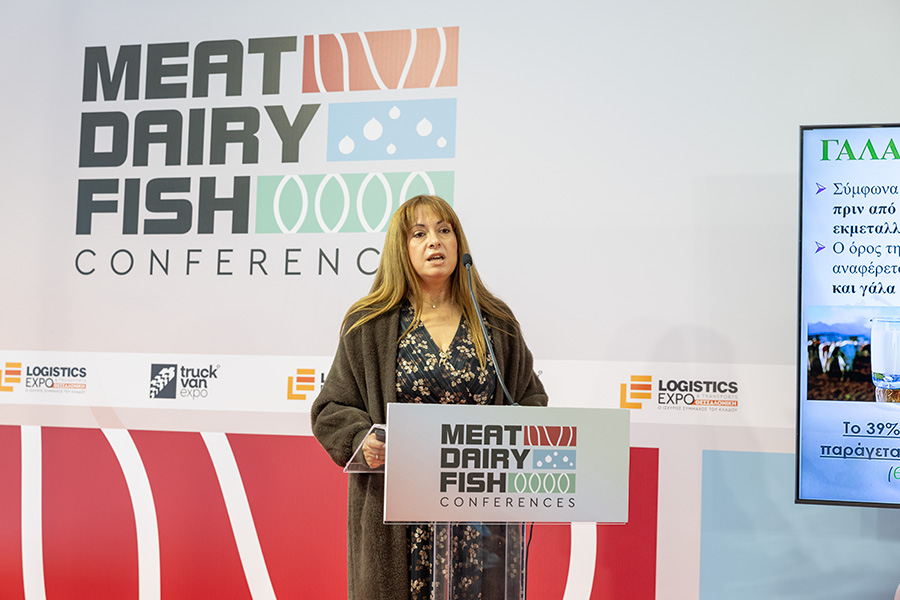
First to take the floor was Ms. Georgia Dimitreli, Professor at IHU, who focused on the value of kefir. She justified its increasing popularity among consumers. It is a natural probiotic and fermented dairy product. Additionally, anti-cancer properties are attributed to it, and it contributes to a healthy immune system.
The starter culture of kefir is made with kefir grains, liquid kefir, and starter cultures in freeze-dried or frozen form. Important reference was also made to kefir ice cream, which is liked by a large portion of consumers, has fewer calories, and contains beneficial microorganisms.
Raw material management: from the producer to the factory
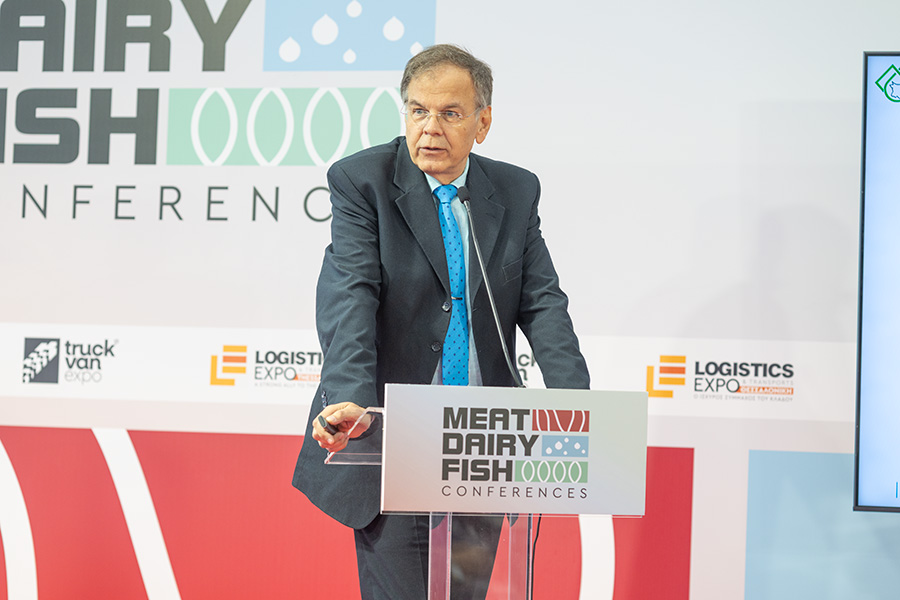
Dr. Christos Apostolopoulos, President of SEVGAP, took over. He highlighted the great importance of biosecurity. He presented genetic improvement as necessary so that we have animals that produce special milk characteristics, which characteristics will subsequently be able to produce distinct food products. At the same time, the President clarified that an AI system should connect all these together and predict what milk an animal will produce.
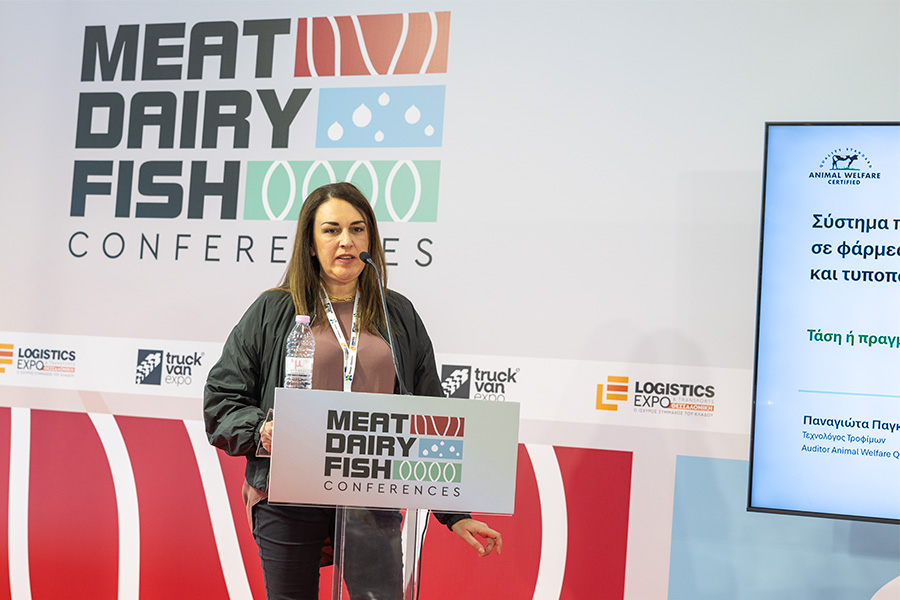
When the floor was given to Ms. Panagiota Pagkakou, Food Technologist, Auditor Animal Welfare Quality Standard, she posed a fruitful reflection to the audience. Essentially, she introduced the topic of whether the quality and welfare system on dairy animal farms and dairy product standardization constitutes a trend or a real necessity today.
Welfare documentation continues across the entire production chain
She emphasized that 90% of Europeans believe that farming and breeding practices must meet basic ethical requirements. “Welfare begins at the farm, and its documentation continues across the entire production chain,” the speaker characteristically commented.
Dr. Kiki Zinoviadou, Dean at Perrotis College, American Farm School, followed, with the topic of optimizing dairy production in a high-cost environment. She made special mention of dairy by-products and their circular utilization.
We measure before we invest, always with human at the center
Whey, as a by-product, therefore ensures protein recovery, concentration, food ingredients, or other applications, depending on the scale and the market. Regarding the corresponding losses and returns, Ms. Zinoviadou revealed that accurate quantification, prevention at the source, appropriate utilization, and reduction of organic waste load are required. Consequently, she concluded that we measure before we invest, connect yield, quality, and resources, and automate in a targeted manner, always with human at the center.
The presentations concluded with Mr. Dimitris Diggiloudis, Sales Manager at AS Hellas. His speech was titled: “Automation & Data: Better Decisions for Production.” “When CIP ceases to be ‘invisible’, capacity appears. Comparing actual duration with a predefined standard, identifying overlapping between lines and wash targets, and redistributing washes are required before deciding on a new investment,” the speaker pointed out. He noted, in fact, that the batch must be tracked from the raw material to the final product.
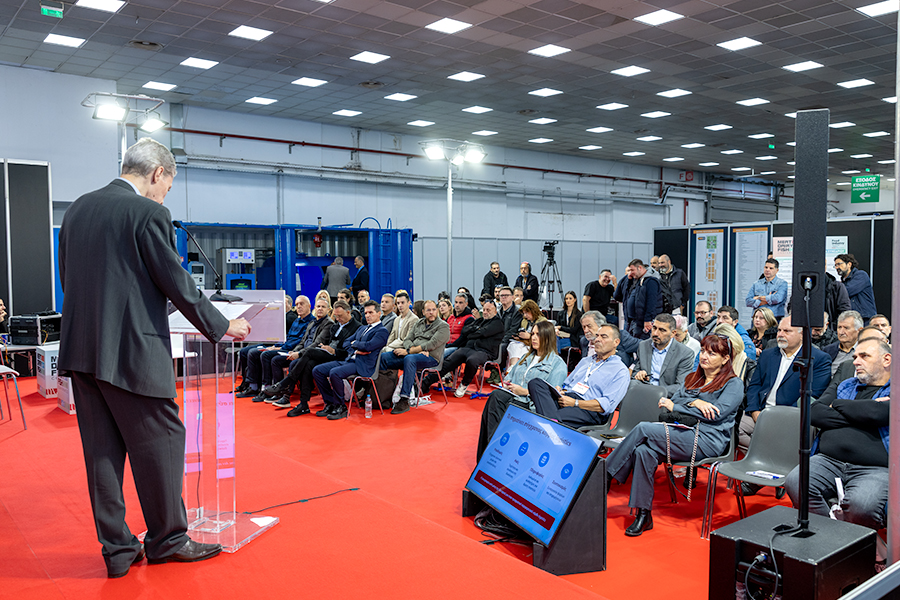
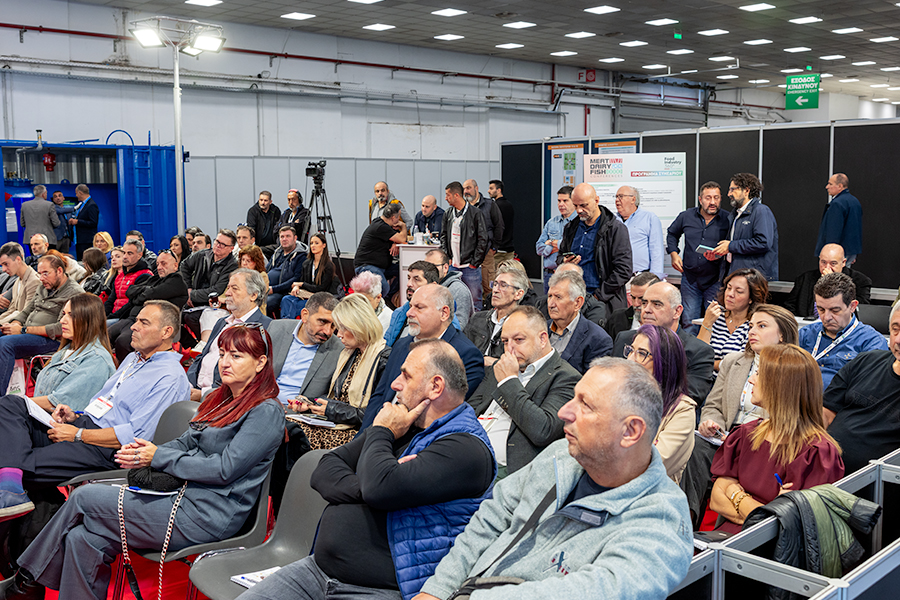
Throughout the conference, the audience posed thoughts and insightful questions, a fact that enhanced interest in the speeches and contributed to highlighting the conclusions of the day.
Summary – Sunday, October 18
MEAT DAY: The modern butcher shop & customer experience
The role of the modern butcher shop in connecting Greek livestock farming with the consumer, as well as the challenges shaping the sector’s future, was highlighted during a conference on the final day of the Exhibition, with the participation of market representatives, local government officials, and professional bodies.
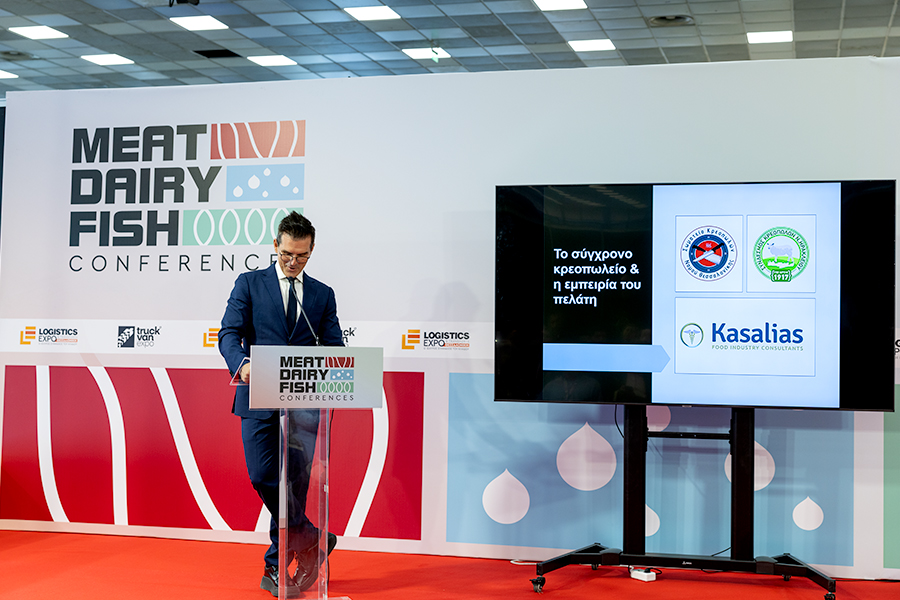
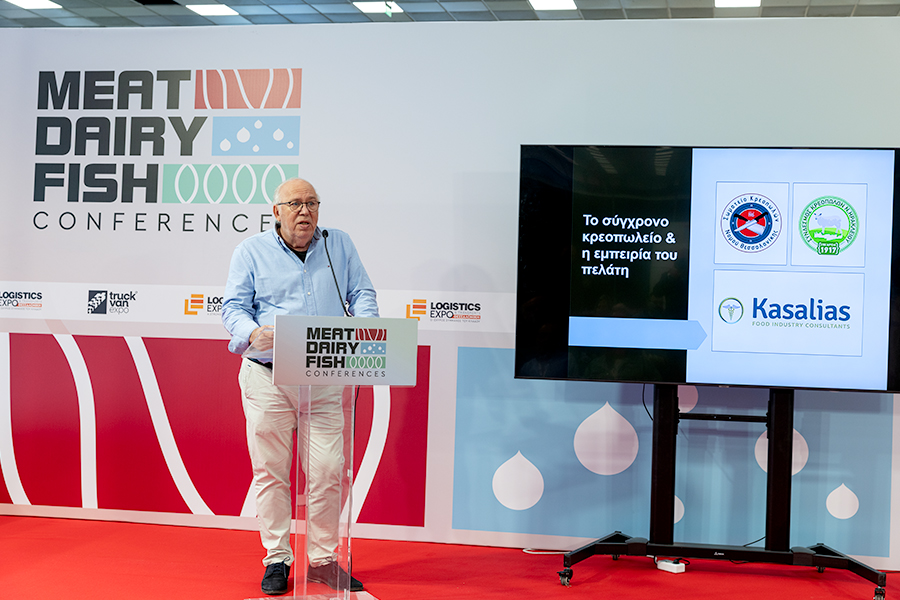
The introduction was made by Nikos Kasalias, retired Colonel, Veterinarian, Food Microbiologist, while in his welcome address, Athanasios Kasidis, president of EDOTOKK, emphasized the importance of the butcher shop as a link connecting the livestock farmer’s hard work with the family table. As he stressed, “The butcher shop is the point where the livestock farmer’s effort, through the hands and knowledge of the butcher, reaches the family’s hands. Therefore, when this link is lively, modern, and reliable, we all win.”
If we want to continue to exist, we must call things by their name
In his speech titled “The ties of the butcher with the primary sector”, Giorgos Kefalas, Vice Regional Governor of Agricultural Development of the Region of Central Macedonia, noted the need for transparency regarding the origin of meat. “The fact that for 40 years we didn’t call things by their name did us harm. For example, in Thessaloniki there are 52 butcher shops claiming to sell Sochos meat; if all of them were actually selling Sochos meat, its cost would be different. So, we are shooting ourselves in the foot,” he explained. He added that if we want to continue to exist, we must call things by their name, correctly. Then everyone will get their fair share of the market. And, of course, there should be no rift in the relationship with the butcher, because this relationship is unbreakable.
The CEO, Antonis Bouris, referred to the role of the Central Market of Thessaloniki. He highlighted the fragmentation of operations and the need for better coordination, utilization of data and sensors, and closer cooperation between agencies and businesses.
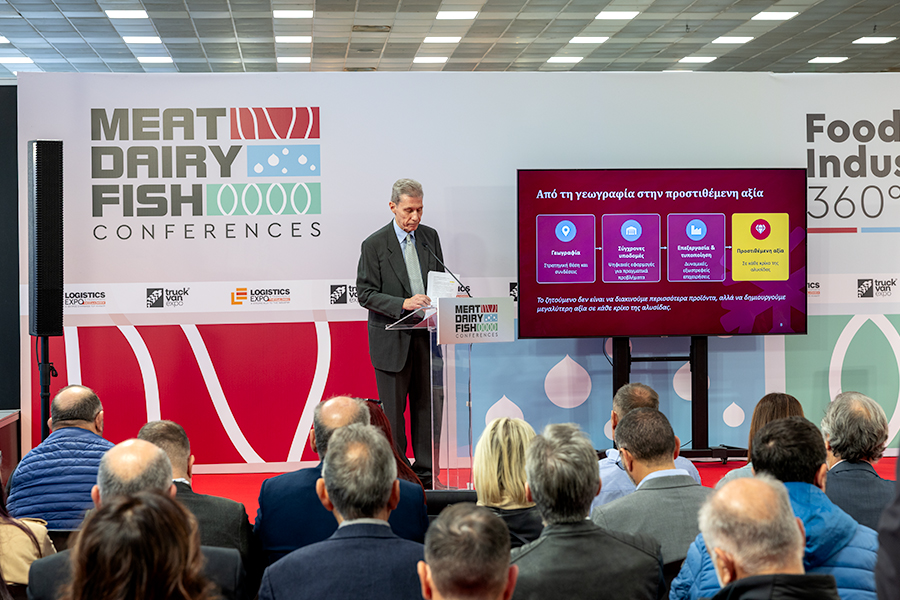
Nikos Kasalias then presented data on consumer requirements. Specifically, 71% trust the butcher when selecting Greek meat, while 66.6% consider quality a basic purchasing criterion. At the same time, 62.7% of butchers estimate that Greek origin is an important selection criterion for their customers.
Our signature counts and our advice needs a new channel
Support for Greek livestock farming and the need for a joint, methodical effort was emphasized by Lefteris Ntourakis, President of the Heraklion Crete Butchers Association. The speaker agreed with Mr. Kefalas that the industry must now only tell the truth. The Greek livestock farmer needs practical support, as it is an interdependence and a shared fate for the future of the sector, and methodical work must be done with consistency and collective effort.
Nikos Mpalampanidis, President of the Thessaloniki Butchers Association, focused on new consumer habits, revealing that 62.8% get informed via TikTok, Instagram, and other digital media. For young people, the first advice comes from the internet, while the butcher’s advice is limited to 5.2%. Consequently, the butcher’s proposal must also exist on the mobile screen, not only on the counter. “Our signature counts and our advice needs a new channel,” he clarified.
Savvas Tortopidis, General Manager of MIK3 SA, highlighted the importance of digital tools for communication, education, costing, and production support.
The new era in meat
“Transition” is the word that describes the meat market in 2026, according to Vassiliki Roussopoulou, Journalist for MEATPLACE magazine and moderator of the discussion. As she noted, today’s consumer compares, calculates, and substitutes. They look for the best relationship between price, quality, and quantity, and when necessary, they switch categories. “So, the question is not only how much the meat will cost. It is who will be able to produce it competitively, who will be able to buy it, and ultimately, which meat will end up on the Greek plate in the coming years,” the moderator characteristically commented.
Giorgos Oikonomou, Executive Director of SEVEK, stated that the goal is not to produce cheaper products of lower quality, but to produce the same or better products with fewer losses, less waste, and greater productive efficiency. The quality and safety of meat products are not merely a compliance obligation. They constitute a significant competitive advantage and a prerequisite for business sustainability.
Verifiable proofs of authenticity are essential
The importance of digital traceability was highlighted by Manos Papadakis, Senior Executive at GS1 Association Greece, in his presentation titled “GS1: One QR. One Digital Identity. Full Traceability”. Utilizing GS1 standards and the new generation of QR Codes can provide consumers with access to reliable information regarding the origin and authenticity of products, while enhancing transparency in the supply chain. Undoubtedly, verifiable proofs of authenticity represent a key value-added element for high-quality products.
The common denominator for everyone is that the competitiveness of the meat market requires more efficient production, quality assurance, and the utilization of technology.